
Edmonton has seen a devastating and significant rise in drug poisoning deaths when it comes to addiction. The unregulated drug supply has become increasingly dangerous, heavily impacting our community:
- More than 300 people died due to drug poisoning in the first five months of 2025 in Edmonton alone.
- In March 2025, 87 people died of opioid drug poisoning in the capital region, marking the highest amount of opioid-related deaths on record since public tracking began in 2016.
- A major contributing factor is the increasing toxicity of the drug supply; data shows that in the first few months of 2025, 78 per cent of opioid deaths in Edmonton involved carfentanil.
The cycle of addiction can affect anyone at any time, crossing all socioeconomic boundaries. While there is a common misconception that one only needs to use a drug once to become permanently addicted, the truth is far more intricate. Addiction is a complex brain disorder, not a simple lack of willpower.
Every person struggling with substance abuse goes through a specific addiction cycle. Knowing how this cycle operates—and how to intervene—can potentially save the life of a loved one. Keep reading to understand the psychology behind the addiction cycle and how professional addiction therapy in Edmonton can help you or your family break free.
Types of Addictions
Addiction can take many forms, and new addictive behaviors are identified and researched by the psychological community daily. When we think of addiction, we usually think of substances, but the brain can also become addicted to the dopamine release of certain activities.
You can develop an addiction to, among others:
- Alcohol
- Illicit Drugs and Prescription Medications
- Gambling
- Sex and Love
- Food
- Shopping
- Gaming and Social Media
- Tobacco
Each of these challenges requires specialized, targeted treatment to provide the best chance at long-term recovery. Some addictions on this list are grouped under the title of “process addictions” (or behavioural addictions). This includes compulsive actions like gambling, shopping, and gaming. Whether the addiction is to a substance or a behaviour, the underlying mechanisms in the brain are remarkably similar.
The Phases of the Addiction Cycle
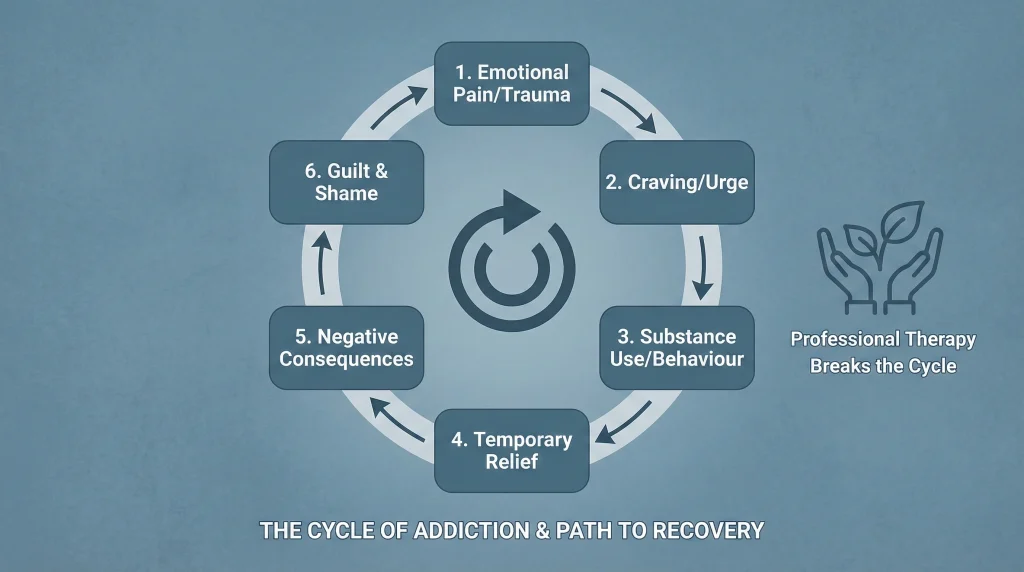
Addiction isn’t guaranteed from using an illicit drug or engaging in a behaviour just once; it is a progressive, complex process. The brain’s chemistry fundamentally changes over time as it adapts to the constant flood of dopamine.
There are distinct stages that the addiction evolves through:
- Initial Use: The individual tries the substance or behaviour for the first time. This might be out of curiosity, peer pressure, or an attempt to cope with stress or trauma.
- Abuse: The individual begins using the substance or engaging in the behaviour more frequently, often to achieve the same “high” or to numb emotional pain.
- Tolerance: The brain adapts to the substance. The user now requires larger amounts, or more frequent use, to achieve the desired effect.
- Dependence: The body and brain now rely on the substance to function normally. If the user tries to stop, they experience severe, often painful physical and psychological withdrawal symptoms.
- Addiction (Substance Use Disorder): The individual loses the ability to control their use, despite severe negative consequences to their health, relationships, career, and finances. The craving becomes overwhelming and compulsive.
- Relapse: Addiction is a chronic condition. Relapse—returning to the substance after a period of sobriety—is a common part of the cycle. It does not mean failure; it simply means the treatment plan needs to be adjusted.
While using once or twice doesn’t instantly make someone an addict, continued use can rapidly propel a user through these stages before they even realize how deep into the addiction they are. Recognizing these phases and seeking treatment is the vital first step to breaking the cycle.
The Addiction Recovery Process
Recovery is not an easy journey. It requires immense courage, vulnerability, and complete dedication from the recovering individual. Because addiction alters the brain’s fundamental wiring, unlearning these patterns takes time.
There is always the chance of relapse, and many individuals go through several attempts before finally achieving long-term sobriety. This is why having a robust support system and accessing professional addiction therapy in Edmonton is so critical to sustainable healing.
Treatments for Addictions
Fortunately, there are several evidence-based treatment options available. Recovery is not a one-size-fits-all process; it must be tailored to the individual’s specific needs, the severity of the addiction, and any co-occurring mental health disorders (such as depression or anxiety).
Let’s discuss the primary avenues of care:
1. Inpatient Treatment
With inpatient (or residential) treatment, you reside at a specialized recovery facility. Primary Treatment typically lasts between 21 and 28 days, with additional time added if you transition into Secondary or Tertiary Treatment. During this time in a highly structured, trigger-free environment, you learn about the disease of addiction, attend daily support meetings, and participate in intensive individual and group counselling.
2. Outpatient Treatment
Outpatient care gives the recovering individual more flexibility, allowing them to live at home and maintain certain work or family responsibilities. However, it still requires strict dedication, demanding that the individual regularly attend meetings, therapy sessions, and medical check-ins.
3. Detox Treatment
Detoxification is a necessary first step for individuals who are heavily dependent on drugs or alcohol. Medical detox provides 24/7 clinical supervision to safely manage the dangerous and painful physical symptoms of withdrawal before the patient moves on to Primary Treatment.
4. Psychotherapy
Therapy is the cornerstone of long-term recovery. Detox removes the substance from the body, but therapy heals the mind and addresses the root causes of the addiction. At Meiers Psych, we utilize several different forms of therapy, each with distinct benefits:
- Individual, Group, & Family Therapy Sessions: Addiction impacts the whole family system. Rebuilding trust and communication often requires collaborative therapy.
- Cognitive Behavioral Therapy (CBT): This approach helps clients identify and change the destructive thought patterns and triggers that lead to substance use.
- Eye Movement Desensitization and Reprocessing (EMDR): EMDR therapy has been gaining significant popularity and clinical backing since its inception in the late 1980s. The Canadian Psychological Association (CPA) recognizes EMDR as an effective treatment for PTSD. Research has shown that EMDR may also be utilized to assist with recovery from substance use and behavioral addictions. By helping the brain reprocess the deep-seated trauma that often drives an individual to self-medicate, EMDR can drastically reduce the urge to use.
If you are looking for broader community resources, organizations like the Centre for Addiction and Mental Health (CAMH) and Alberta Health Services provide extensive information on navigating the continuum of care.
Cycle of Addiction Conclusion – Start Your Addiction Recovery Today
Recovery is a deeply personal journey. No one can force you to take the first step; you have to want it for yourself. Perhaps you feel like you have hit rock bottom, or perhaps you simply recognize that your habits are beginning to control your life, and you are ready to break the cycle of addiction once and for all.
You do not have to face this alone. If you are looking for compassionate, evidence-based addiction therapy in Edmonton, we are here to help you safely navigate your path to wellness.
Would you like to schedule a consultation with one of our experienced psychologists at Meiers Psych to discuss a personalized treatment plan?
