
Parenting is a journey filled with constant changes, challenges, and developmental milestones. As children grow, they naturally go through phases of defiance, moodiness, fearfulness, and boundary-testing. For parents, this constant evolution often leads to a persistent, nagging question when their child’s behavior becomes challenging: “Is this just a normal phase, or is there something deeply wrong?”
When a toddler throws a massive tantrum in the grocery store, or a teenager suddenly locks themselves in their room and refuses to speak, it is easy to write it off as “kids being kids.” However, beneath the surface of these seemingly typical behaviors, children can harbor profound, hidden anxiety and unresolved trauma. Because children do not possess the emotional vocabulary of adults, their psychological distress rarely looks like adult distress. Instead, it masks itself as behavioral issues, physical illnesses, or sudden academic drops.
Understanding the difference between a passing developmental hurdle and a serious psychological issue is crucial for your child’s long-term well-being. In this comprehensive guide, we will help you decode your child’s behavior, explore the hidden signs of psychological distress, and determine exactly when to seek professional child counselling in Edmonton.
Normal Development vs. Clinical Distress: Knowing the Difference
To identify when a child needs help, we must first establish what “normal” looks like. Child development is not linear; it is characterized by leaps forward and temporary regressions.
The “Normal” Phases:
- Toddlers (Ages 1-3): Extreme frustration, tantrums over small things, and separation anxiety are completely normal as they develop independence but still heavily rely on caregivers.
- Preschool/Early Elementary (Ages 4-7): New fears (the dark, monsters, bugs), occasional nightmares, and testing the limits of rules are standard as their imagination and social worlds expand.
- Preteens and Teens (Ages 8-17): Increased desire for privacy, mood swings driven by hormones, pulling away from parents to align with peers, and occasional academic stress are all expected rites of passage.
When It Crosses the Line into Clinical Distress: The defining line between a phase and a psychological issue comes down to three factors: Duration, Intensity, and Impairment.
- Duration: Has this “phase” lasted for more than a few weeks or months without any sign of improvement?
- Intensity: Is the emotional reaction wildly disproportionate to the trigger? (e.g., A tantrum that lasts for two hours and involves violent self-harm, rather than a standard 10-minute meltdown).
- Impairment: Is this behavior preventing the child from functioning normally? Is it destroying their ability to go to school, make friends, sleep through the night, or participate in family life?
If the behavior is intense, long-lasting, and impairing their daily life, it is no longer a phase. It is a sign that they need help.
How Children Process Stress Differently Than Adults
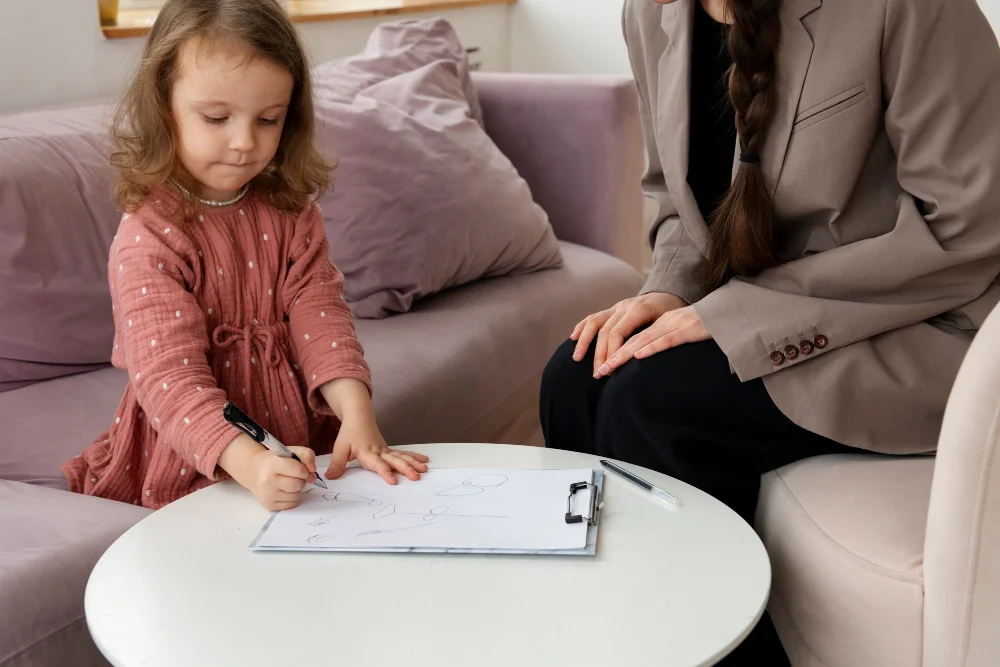
One of the biggest mistakes adults make is expecting children to communicate their anxiety or trauma the way an adult would. An adult might say, “I am feeling overwhelmed by my workload, and I am experiencing a lot of anxiety about my future.” A child cannot do this. Their prefrontal cortex—the part of the brain responsible for logical reasoning and complex emotional articulation—is still under construction.
Instead of using their words, children use their bodies and their behaviors to signal distress. If you are looking for the signs of anxiety in children, you must learn to look beyond the obvious.
1. Somatic (Physical) Symptoms
When a child’s nervous system is overwhelmed by anxiety, the stress hormones (cortisol and adrenaline) have to go somewhere. They often manifest physically. A child suffering from hidden anxiety might constantly complain of:
- Unexplained stomach aches (especially on Sunday nights or before school).
- Frequent headaches.
- Nausea or vomiting without a viral cause.
- Unexplained muscle tension or fatigue.
2. Behavioral Regressions
When a child experiences trauma or severe stress, they often regress to behaviors they had previously outgrown. This is the brain’s subconscious attempt to return to a time when they felt safer and more protected. Signs of regression include:
- Sudden bed-wetting in a child who has been potty-trained for years.
- Thumb-sucking or baby talk.
- Intense, new clinginess or separation anxiety when being dropped off at school.
3. Changes in Play and Sleep
Play is a child’s language. If a child has experienced a disturbing event, they will often reenact it during play. You might notice their play becoming unusually dark, violent, or intensely repetitive. Additionally, sleep is often the first thing disrupted by trauma. Look for severe nightmares, a sudden fear of the dark, or chronic insomnia.
4. “Acting Out” (The Fight Response)
Often, what looks like a discipline problem is actually an anxiety problem. A highly anxious child feels entirely out of control of their internal world, so they try to rigidly control their external world. This can look like extreme bossiness, explosive anger, aggression toward siblings, or defiance. They are not trying to be “bad”; their nervous system is in a state of “fight or flight.”
Understanding Child Trauma: It’s Not Always What You Think
When parents hear the word “trauma,” they often imagine worst-case scenarios: severe physical abuse, surviving a natural disaster, or losing a parent. While these “Big T” traumas absolutely require immediate psychological intervention, “little t” traumas can be equally damaging to a developing brain.
It is vital for parents to understand the various types of trauma children experience. A child’s perception of an event dictates whether it is traumatic, not the adult’s perception. What an adult views as a minor disruption, a child might view as a catastrophic loss of safety.
Common sources of hidden childhood trauma include:
- High-Conflict Divorce: Witnessing constant, unresolved shouting or hostility between parents.
- Bullying: Relentless peer rejection, cyberbullying, or physical intimidation at school.
- Medical Trauma: Experiencing sudden, invasive surgeries, severe illness, or chronic pain.
- Hidden Emotional Neglect: Growing up in a home where physical needs are met, but emotional needs are consistently invalidated, ignored, or mocked.
- The Loss of a Pet or Sudden Move: Disruptions to a child’s attachment figures or primary environment can trigger a profound grief response that goes unprocessed.
When a child experiences these events without the support of a fully regulated, comforting adult to help them process the emotions, the distress becomes trapped in their nervous system. This is where specialized child trauma therapy becomes essential to help them reprocess the event and restore their sense of safety.
The Checklist: When to Get Counselling for a Child

If you are currently debating whether your child’s behavior warrants professional intervention, it helps to have a clear benchmark. Knowing when to get counselling for your child is half the battle.
Consider scheduling an assessment with a registered psychologist if your child exhibits any of the following red flags:
Emotional Red Flags:
- They display persistent sadness, tearfulness, or a flat, empty affect for more than two weeks.
- They express feelings of worthlessness, intense guilt, or state that “nobody likes me.”
- They exhibit extreme, debilitating fears or phobias that interfere with daily life (e.g., refusing to leave the house).
- They make any statements regarding self-harm, wanting to die, or not wanting to wake up. (Note: This should always be taken seriously and addressed immediately by a professional).
Behavioral Red Flags:
- A sudden, drastic drop in academic performance or a sudden refusal to go to school.
- Withdrawing completely from friends, family, and activities they previously loved.
- Severe, unmanageable outbursts of anger, violence, or destruction of property.
- Engaging in risky, out-of-character behaviors (particularly in older children and teens), such as substance abuse or running away.
Physical/Somatic Red Flags:
- Significant, unexplained weight loss or weight gain, or a sudden obsession with food restriction.
- Chronic sleep disturbances, frequent night terrors, or sleeping significantly more than usual.
- Unexplained physical ailments (stomach aches, headaches) that pediatricians cannot find a medical cause for.
The Crucial Role of the Parent: Education and Training
One of the most common misconceptions about child counselling is that the parent simply drops the child off for an hour, the therapist “fixes” the child, and the child is returned fully healed.
In reality, successful child therapy deeply involves the parents. A child’s primary environment is their home, and their primary regulators are their parents. If a child attends therapy once a week but returns to an invalidating, chaotic, or highly stressful home environment for the other 167 hours of the week, the therapy will not stick.
This is why our clinic places a massive emphasis on parent education and training programs.
When a child is dealing with trauma or severe anxiety, the parents must learn new ways to interact with them. Parent training in the therapeutic context involves:
- Emotion Coaching: Teaching parents how to validate a child’s terrifying emotions rather than dismissing them with statements like “you’re fine” or “stop crying.”
- De-escalation Techniques: Learning how to co-regulate with an exploding child, using calm body language and tone to bring the child’s nervous system back down to baseline.
- Setting Healthy Boundaries: Understanding the difference between being emotionally supportive and enabling a child’s anxiety (e.g., learning how to compassionately encourage a child to face their fear of school rather than allowing them to stay home indefinitely).
- Addressing the Parent’s Own Trauma: Often, a child’s anxiety triggers a parent’s own unhealed childhood wounds. Helping parents recognize their own triggers ensures they do not accidentally project their anxiety onto their children.
By equipping the parents with the right tools, the home becomes an extension of the therapy room, accelerating the child’s healing process.
Frequently Asked Questions About Child Counselling
Parents naturally have many anxieties when considering therapy for their kids. Here are answers to some of the most common questions about child counselling:
Will my child feel like there is something “wrong” with them if I take them to therapy? This depends entirely on how it is framed. If you present therapy as a punishment for bad behavior, they will feel stigmatized. However, if you frame it as “going to see a feelings doctor to help us all learn how to handle big worries,” children usually adapt very quickly. Our therapists use age-appropriate, engaging methods (like art and play) so children often look forward to their sessions.
How long does child therapy take? There is no set timeline. For a child dealing with a specific, recent anxiety (like a fear of dogs after a mild scare), a few targeted sessions might be enough. For children dealing with complex trauma, bullying, or a high-conflict divorce, therapy may be a longer-term process. We continuously assess progress and keep parents deeply informed at every step.
Do you only talk to the child, or do you use other methods? Talk therapy is often ineffective for young children. Instead, our highly experienced psychotherapists utilize a variety of modalities, including expressive art therapy, play-based interventions, and when appropriate for older children and teens, adapted Eye Movement Desensitization and Reprocessing (EMDR) to help process traumatic memories safely without needing to articulate them perfectly.
Finding Expert Child Counselling in Edmonton
Realizing that your child is struggling with more than just a “phase” is a heavy, frightening moment for any parent. You might feel immense guilt, wondering if you did something wrong, or feel entirely overwhelmed about how to fix it.
Take a deep breath. You do not have to know all the answers; you just need to know where to find the right help. Your child’s brain is incredibly resilient. With the right therapeutic interventions, children can overcome severe anxiety, process deep traumas, and return to their joyful, thriving selves.
For over 40 years, the dedicated team at Gary J. Meiers, Ph.D., Jo Ann Hammond-Meiers, Ph.D. and Associates Ltd. has been a trusted cornerstone for mental health support in the Strathcona area. We are incredibly passionate about helping families navigate these difficult waters. Our experienced, registered psychologists specialize in child trauma, anxiety disorders, and comprehensive family interventions.
Whether your family prefers the traditional environment of our clinic, or the convenience of our secure online therapy services available to all Alberta residents, we are here to support you.
Do not wait for the “phase” to pass if your gut is telling you something is wrong. Early intervention is the key to preventing childhood anxiety from becoming a lifelong struggle. Please return to our homepage to learn more about our 40-year history of helping Edmonton families, or contact us directly at 780-433-2269 to schedule a confidential assessment for your child. We are here to help your family find peace, understanding, and a path forward.
